A commercial booth specification is one of the few line items in a restaurant build-out that you have to live with for a long time. The HVAC gets serviced. The flooring gets refinished. The booth either holds up to a decade of service, or it ends up in a dumpster eight years in.
Most booths fail in five places. Here’s how to ask about each one before you sign a purchase order.
1. The frame material at stress points
The single biggest predictor of booth longevity is what’s inside the frame where it’s not visible. Solid kiln-dried hardwood at all stress points is the standard. Plywood and particle board are not equivalents, they delaminate under shear load and they don’t hold fasteners well after a few hundred cycles.
Ask the supplier: “Is the frame solid hardwood at the seat box, the back-to-base junction, and the cap strip?” If the answer is “we use a structural composite,” ask what the composite is. If they can’t tell you, it’s particle board.
2. The fastener and joinery system
Even the best hardwood frame fails if the joints are pneumatic-stapled with bare steel. Resin-coated staples bond to the wood as they’re driven. Reinforcing corner blocks distribute load across the joint and reduce shear stress on individual fasteners.
Ask: “Are corner blocks present at every seat-frame joint? Are staples resin-coated?“
3. The seat deck
A flat plywood deck under a foam pad is the cheapest way to build a booth seat. It’s also the first thing to fail, the deck flexes, the foam compresses, the upholstery saggs. Sinuous-wire springs sized to the span are the commercial-grade answer. Eight-way hand-tied springs are the premium option for high-end specifications.
Ask: “What’s under the seat? Is it spring-deck construction or solid?“
4. The cap-strip and base trim
Most visible damage to a booth happens at the cap strip (where guests rest their arms) and the base trim (where chair backs, floor cleaning, and shoes hit it). Laminated cap strips outlast natural wood in high-traffic rooms. Industrial-grade vinyl base absorbs scuffs and cleans easily.
Ask: “Is the cap strip laminated or natural? What’s the base material?“
5. The upholstery duty cycle
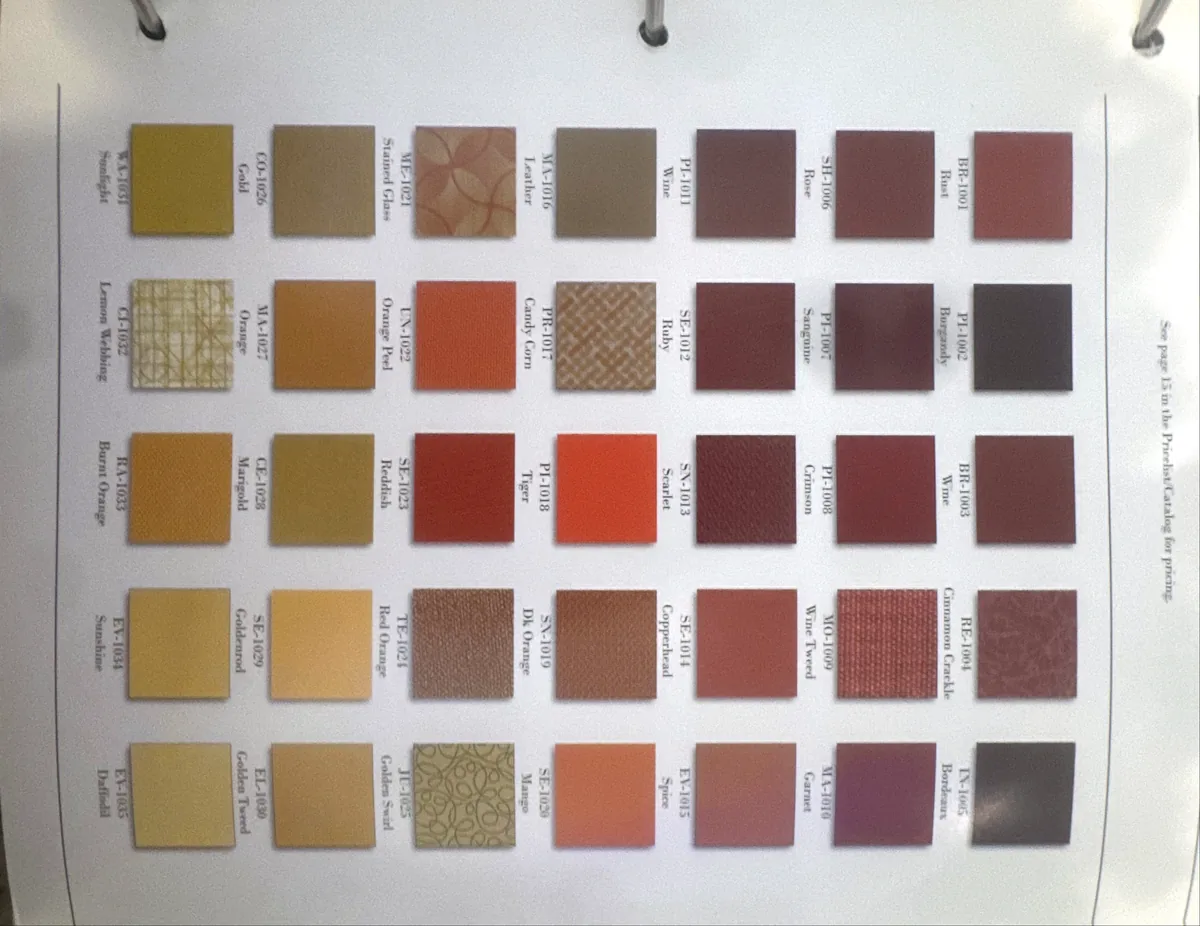
A beautiful fabric on a high-turnover booth is a six-month decision. Commercial vinyls rated for daily cleaning, bleach-cleanable performance fabrics, and commercial-grade velvets with appropriate backing are the three primary directions. Long-pile residential fabrics rarely survive year one.
Ask: “Is this fabric rated for commercial use? What’s the abrasion rating?”
What a real spec looks like
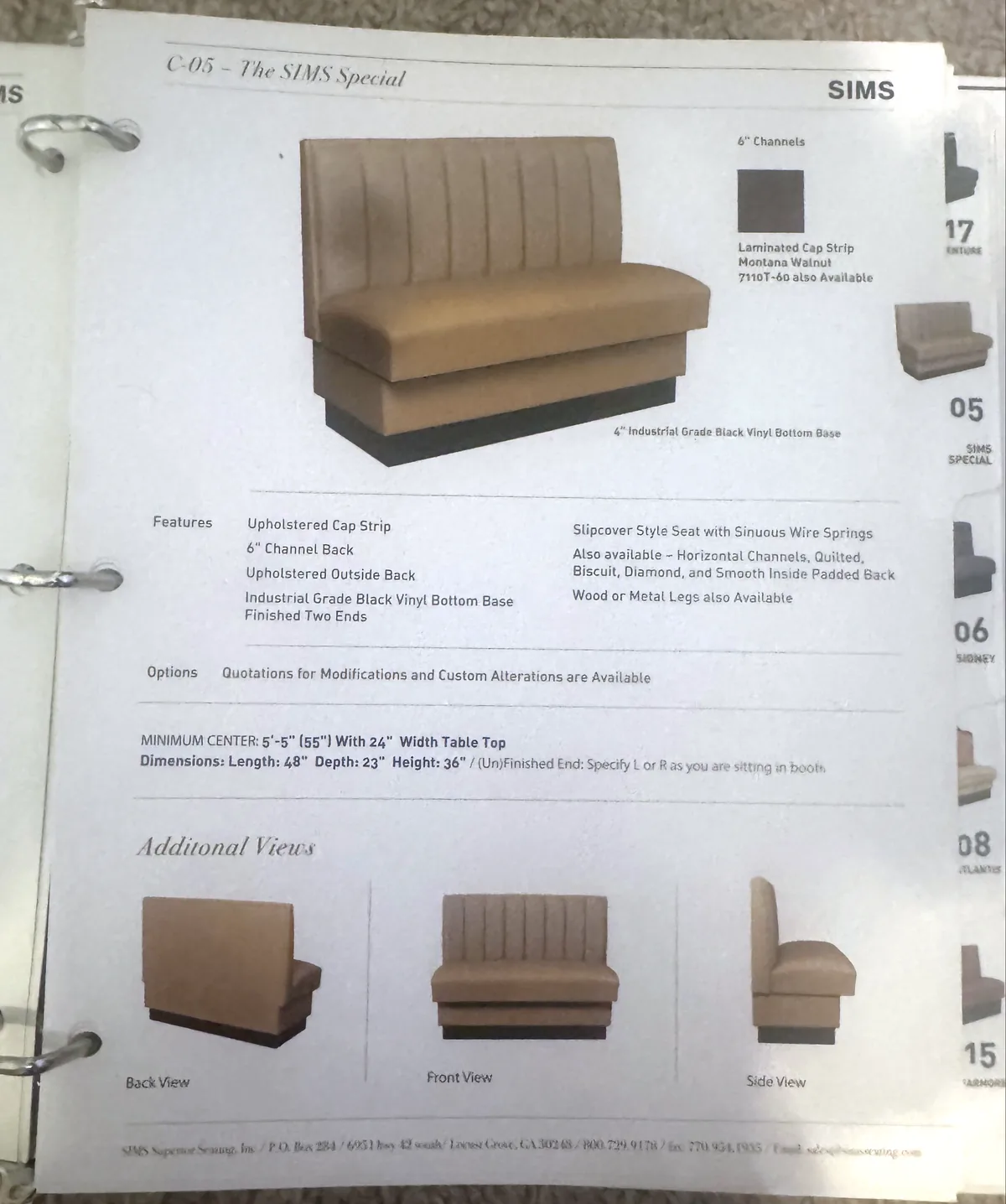
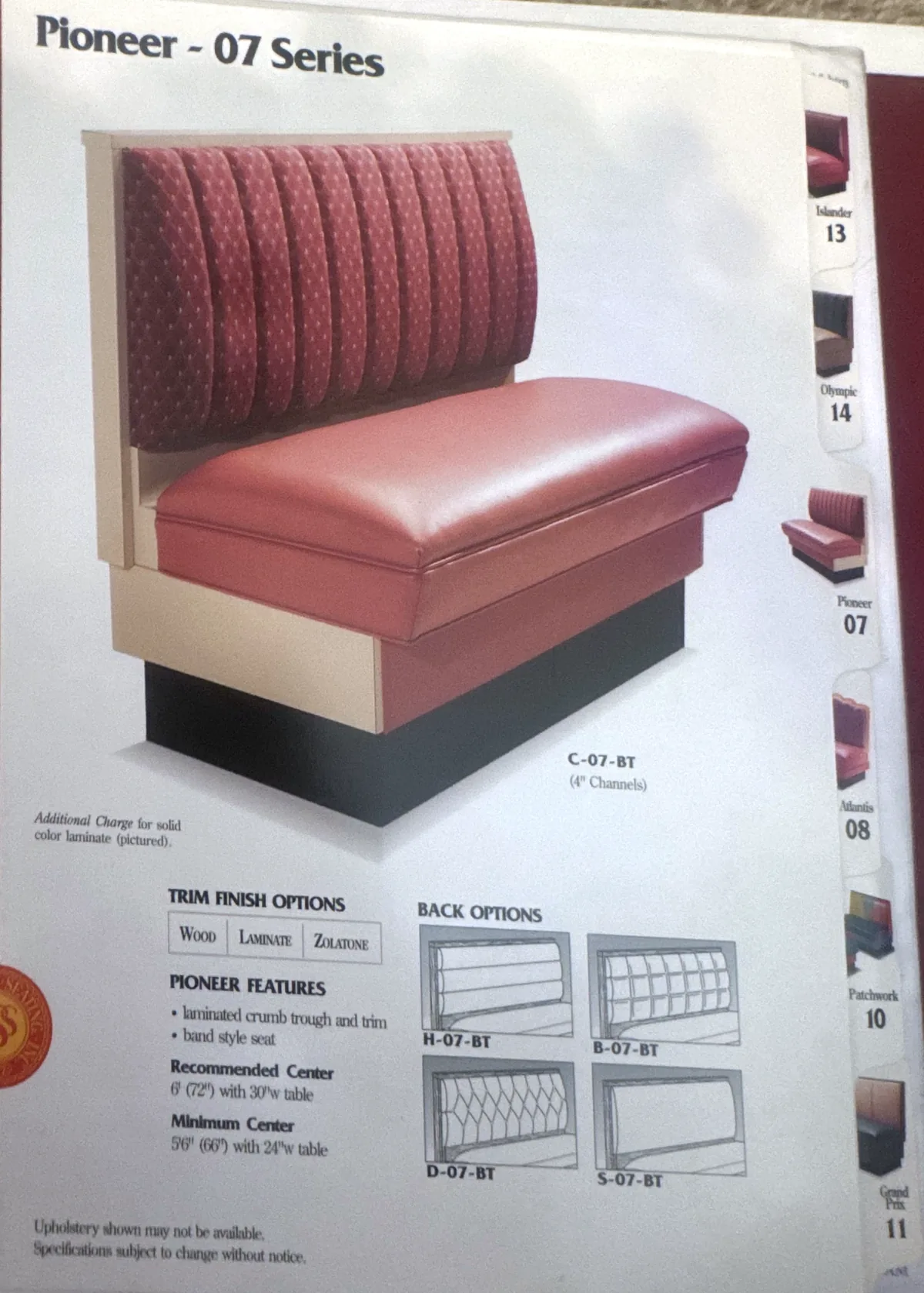
When you read a Sims booth specification, every one of those questions is already answered on the page, frame material, joinery, deck construction, cap-strip finish, upholstery duty rating. That’s not marketing copy; it’s the document a supplier hands a contractor so the contractor doesn’t have to ask.
When a supplier won’t put those details in writing, that’s the answer.
Published by The Sims Family. Last updated October 7, 2025.