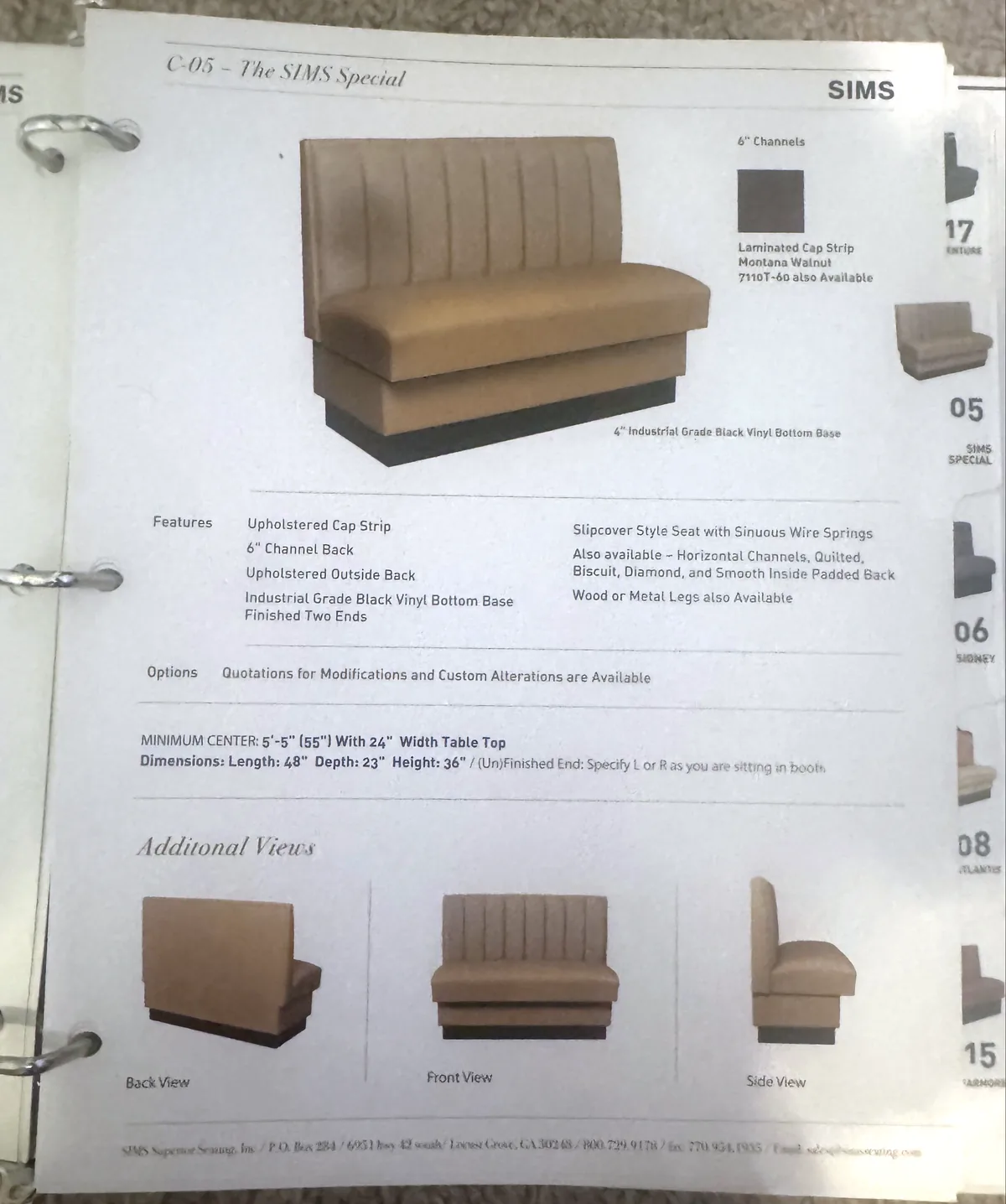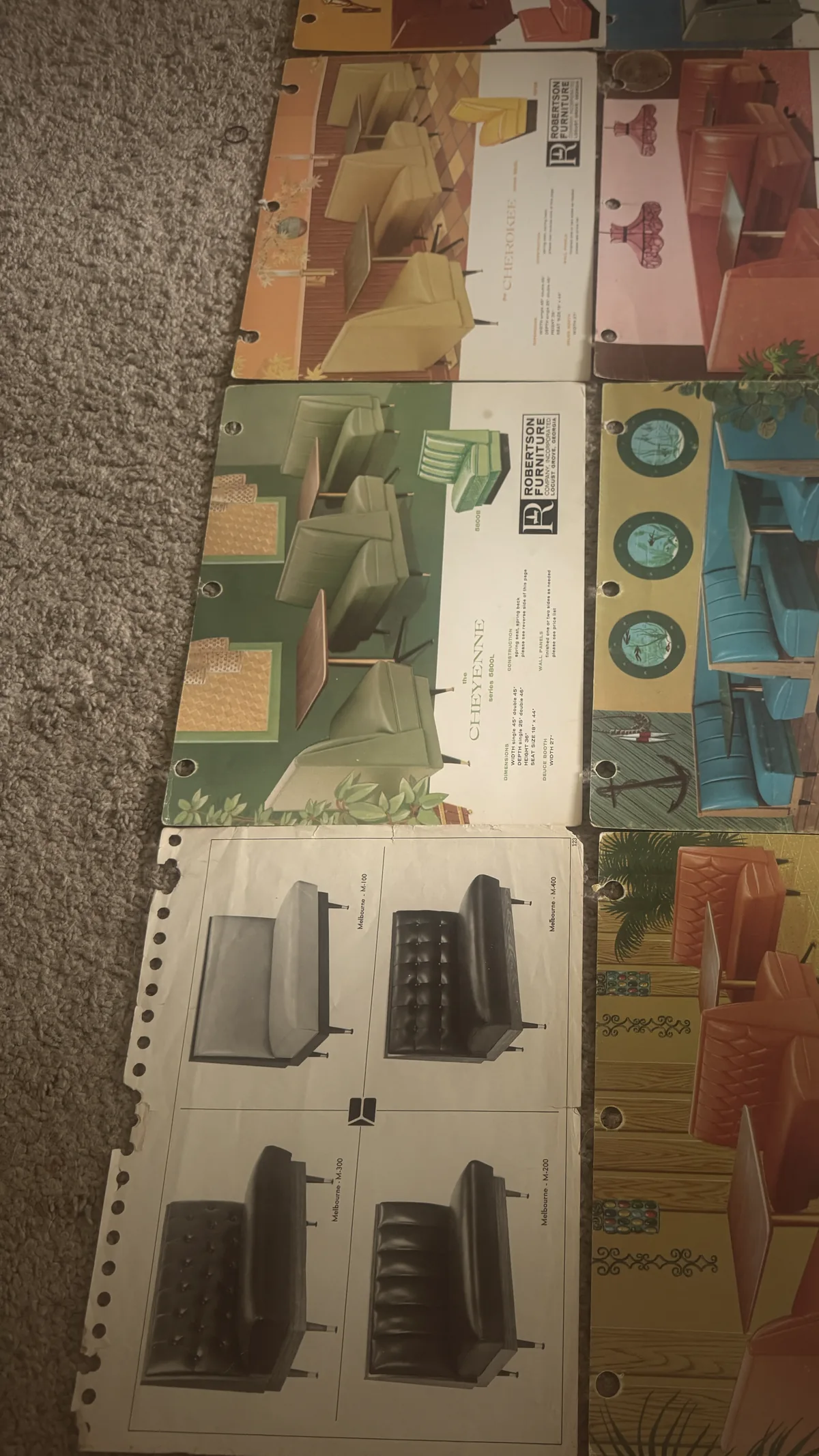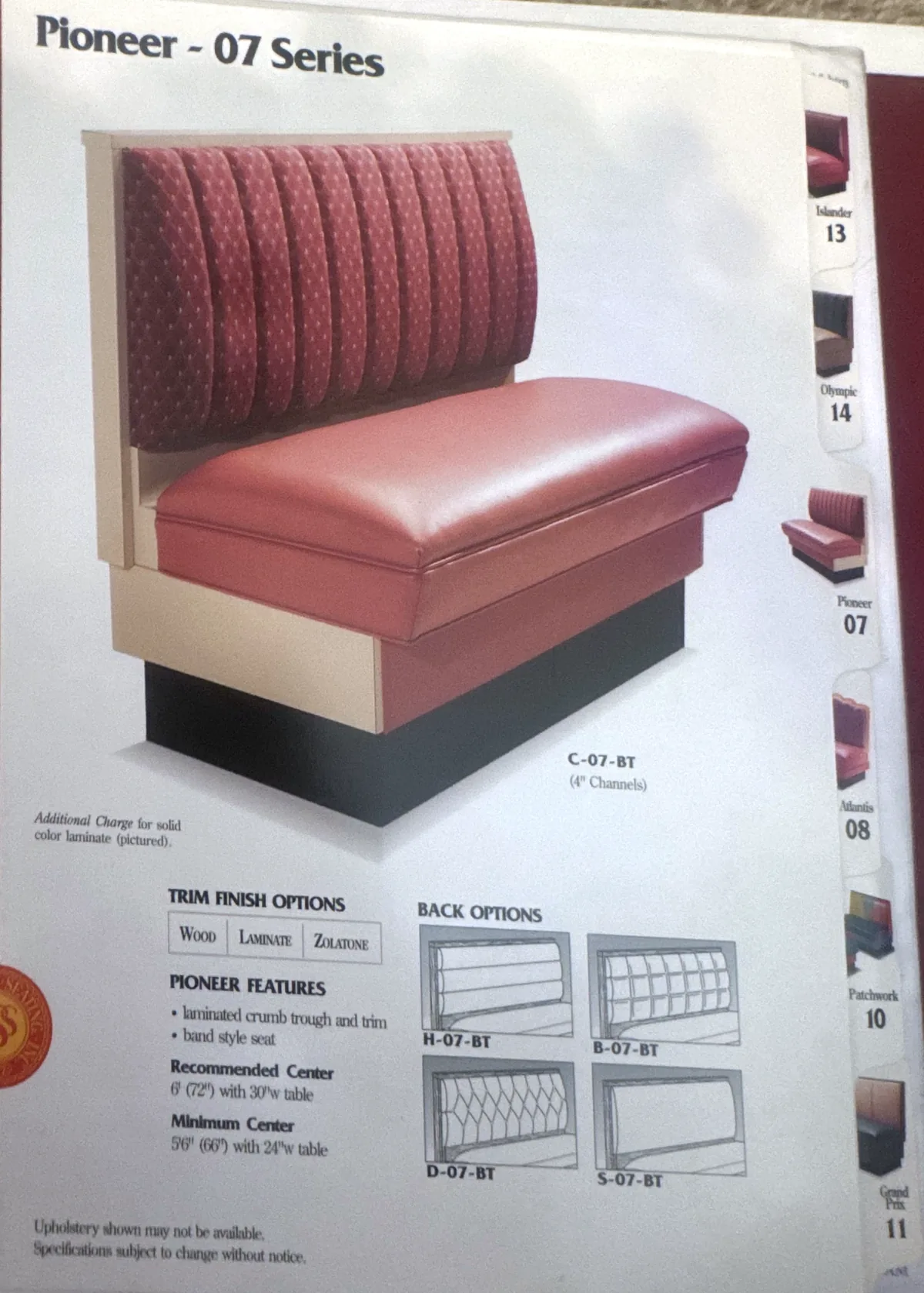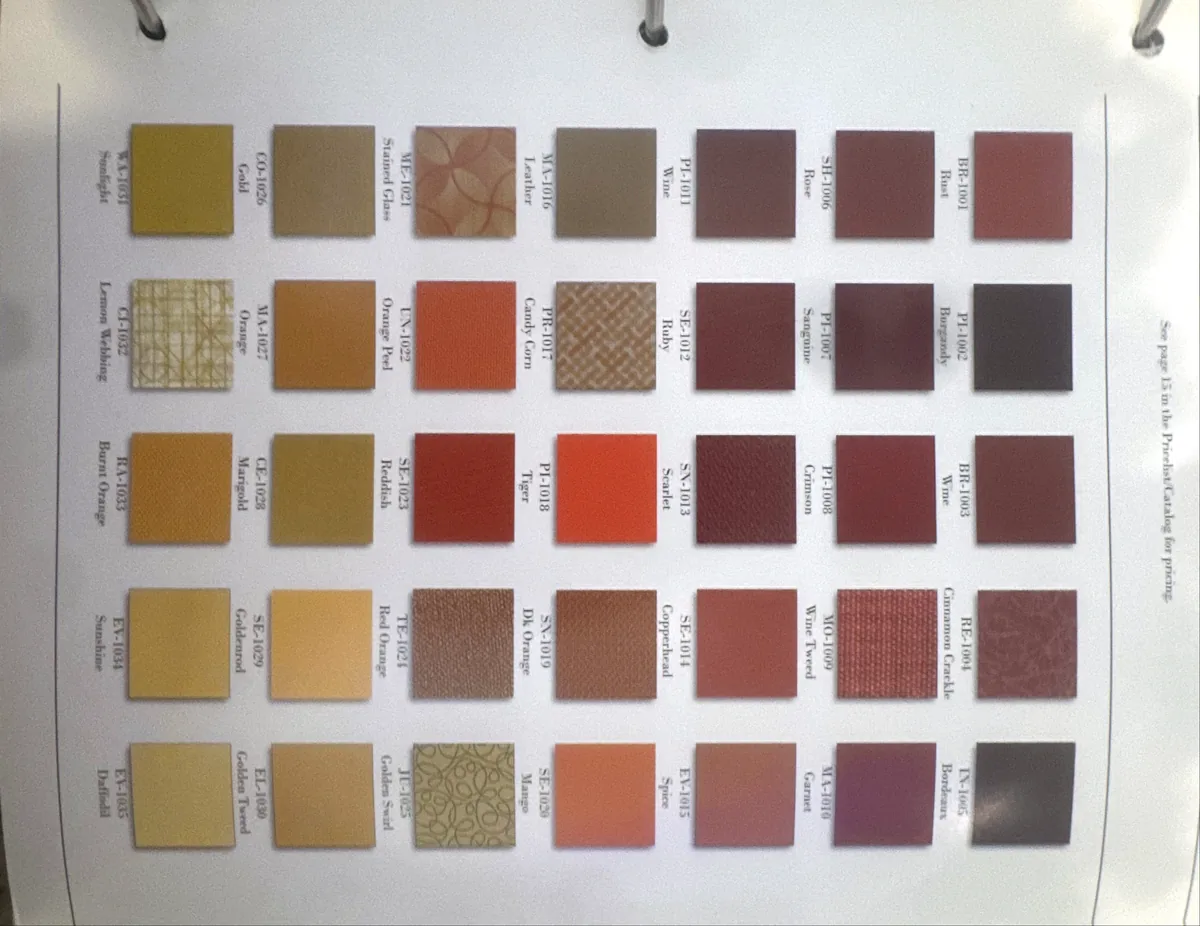
A fabric that looks gorgeous in a designer’s swatch room doesn’t always look gorgeous after eighteen months of Saturday-night service. Selecting commercial upholstery is a duty-cycle problem first and a design problem second.
Frame 1: Vinyl when cleanability is non-negotiable
For bars, quick-service, healthcare waiting areas, and stadiums where seating gets wiped down between every shift, start with a commercial vinyl. The current generation of commercial vinyls have come a long way from the squeaky diner-booth aesthetic of thirty years ago. Embossed leather looks, suede looks, and modern flat colors are all available, and every one of them tolerates a bleach-water cleaning protocol.
The trade-off: vinyl doesn’t breathe. Long sittings in warm rooms can get uncomfortable. That matters less in a 45-minute lunch rush than it does in a four-hour fine-dining service.
Frame 2: Performance fabric when comfort matters
For full-service restaurants, hotel lobbies, and lounges where guests linger, performance fabrics (Crypton, Sunbrella, similar) hit the sweet spot. They breathe, they read as textile rather than synthetic, and they tolerate spills and cleaning protocols. Most are rated for 30,000+ double-rubs (commercial duty); look for 50,000+ if you’re spec’ing a booth that gets sat in for hours at a time.
The trade-off: cost. A solid performance fabric runs roughly 1.5-3× the cost of a commercial vinyl. For some specs, the comfort win is worth it; for others, it’s not.
Frame 3: Velvet when the venue can support it
Commercial-grade velvets with appropriate backing are back in fine-dining and hotel-lounge specifications, and they look extraordinary on a tufted or biscuit-back booth. Specify a 30,000+ double-rub rating with a backed (not pile-only) construction so the velvet can be cleaned without crushing the pile.
The trade-off: velvets show wear patterns where guests slide in and out. Plan for visible duty marks within two years on a high-turnover banquette. In a fine-dining room that turns 90 minutes, that’s usually fine; in a casual room that turns 45, it’s not.
What to ask for in writing
Whatever fabric you select, get three things in writing before you sign:
- Double-rub abrasion rating (Wyzenbeek or Martindale)
- Cleanability protocol (what cleaners are approved)
- Flammability classification (CAL TB-117 minimum; CAL TB-133 for high-traffic public spaces)
If a supplier won’t print those numbers on the spec sheet, the fabric isn’t ready for commercial duty.
Bring us your design palette
If you’ve already picked a fabric from another mill, send it our way, we’ll evaluate it against the duty cycle of your venue and tell you honestly whether we’d put it on a Sims booth. If we’d swap it for something more durable in the same color family, we’ll show you the option side by side.
Published by The Sims Family. Last updated November 1, 2025.