Skip to content
Care & Maintenance

Built to last decades. Here’s how to get every one of them.

A Sims booth is engineered to outlast the lease. A few minutes of the right routine, and avoiding a handful of common cleaning mistakes, is the difference between a booth that still looks new in year ten and one that looks tired in year two. Here’s the method, surface by surface.

By the Surface

Care, material by material.

Find your surface, follow the routine, and keep the wrong products well clear of it. When in doubt about a specific fabric, send us the color code and we’ll send the exact method.

01 Commercial Vinyl

Vinyl: wipe it, don’t dissolve it.

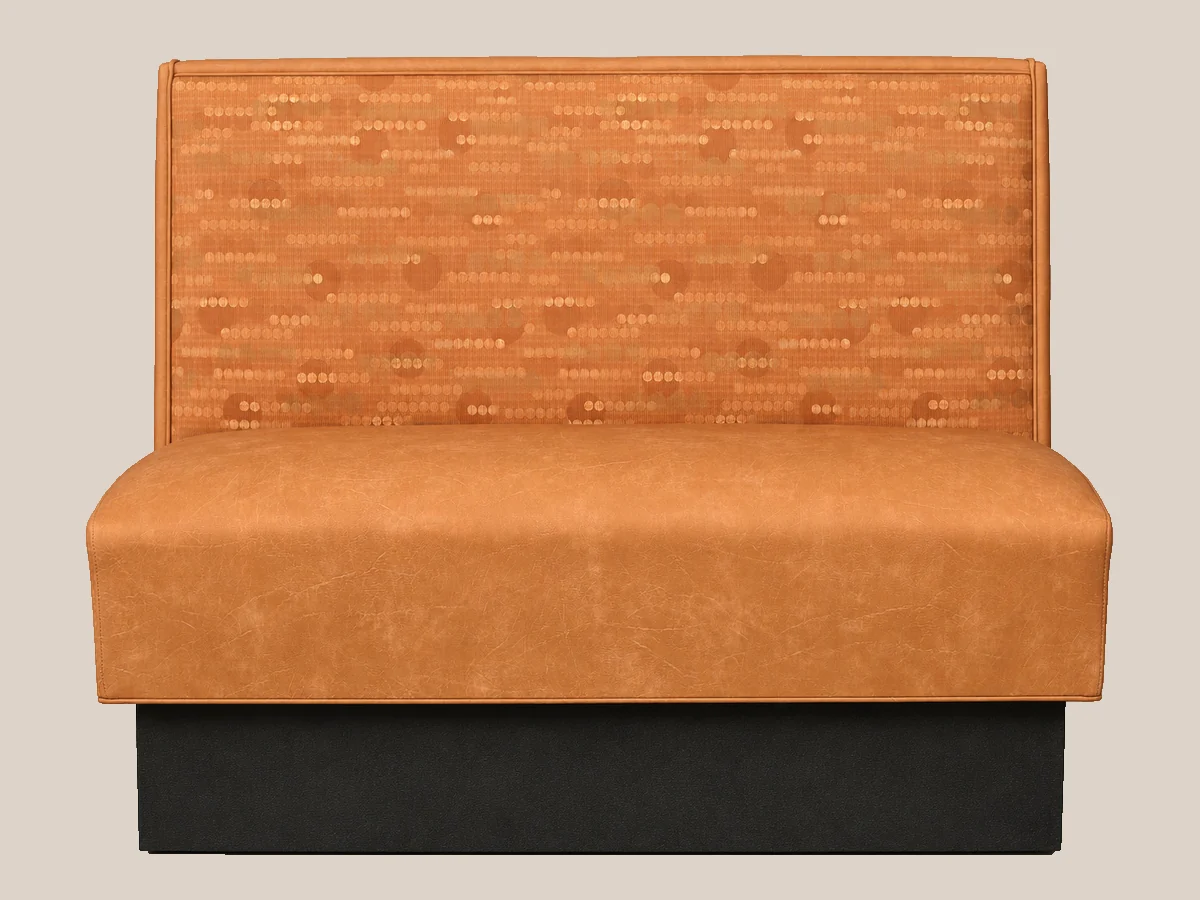
Vinyl is the workhorse of commercial seating, non-porous, wipeable, and forgiving of daily traffic. The thing that ages a vinyl booth early isn’t wear, it’s the wrong cleaner.

  • Wipe weekly with mild dish soap in warm water and a soft cloth.
  • Blot spills as they happen, vinyl won’t absorb if you catch it.
  • Dry the surface after cleaning so you don’t leave water spotting.
  • For stubborn marks, use a vinyl-specific cleaner, test a hidden spot first.
Keep in mind

Never use bleach, ammonia, or alcohol/solvent wipes, they strip the plasticizers and the vinyl cracks within a season.
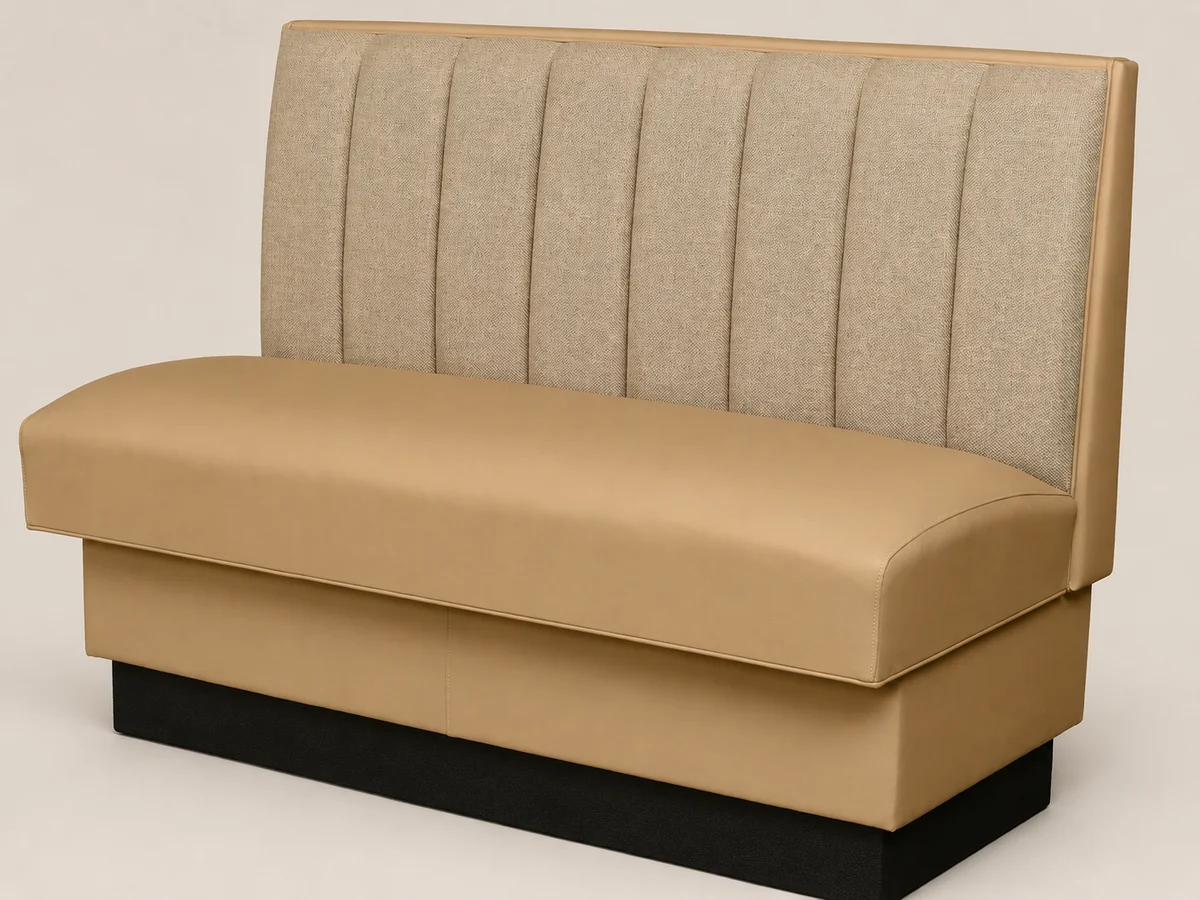
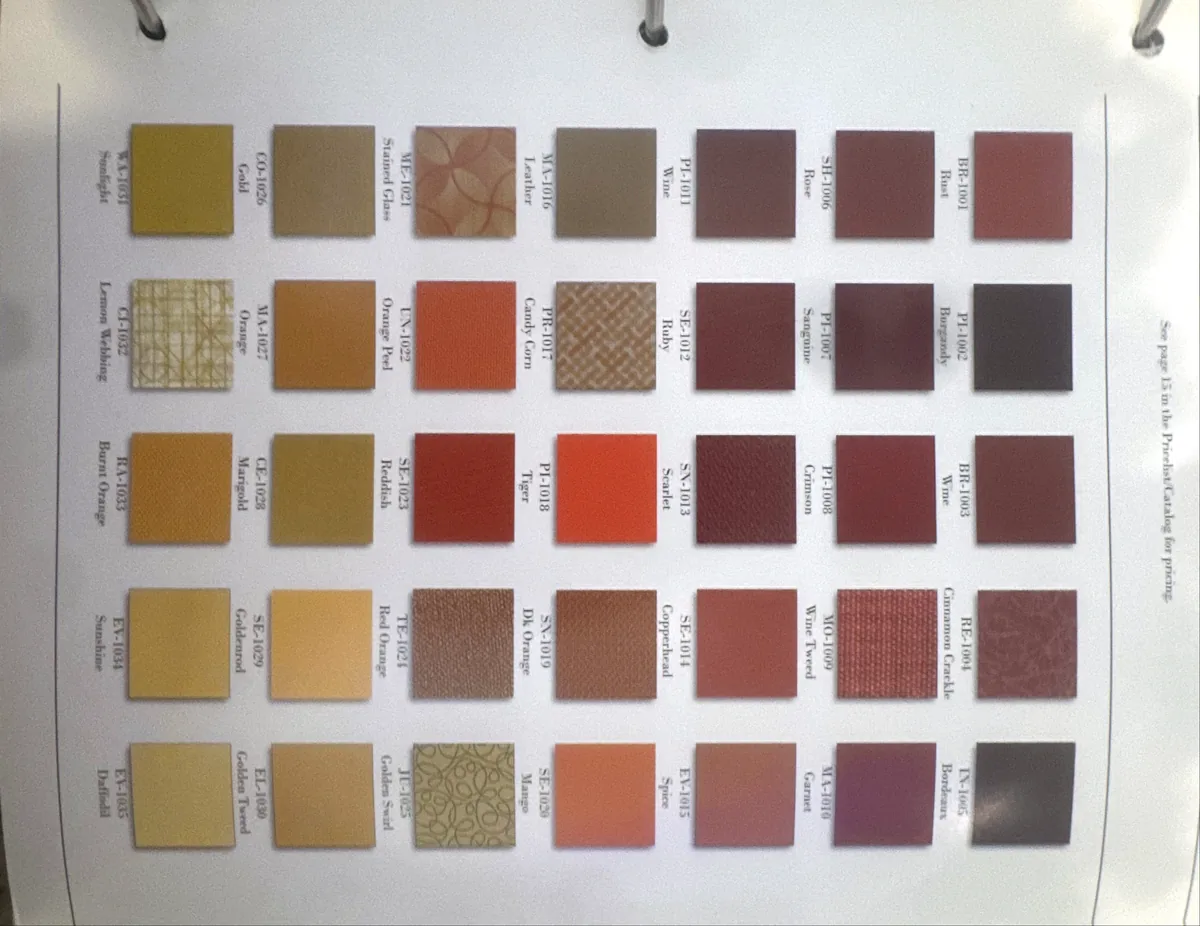
Commercial vinyl booth upholstery
SURFACE · COMMERCIAL VINYL
02 Performance Fabric & Tweed

Fabric: read the code, then clean.

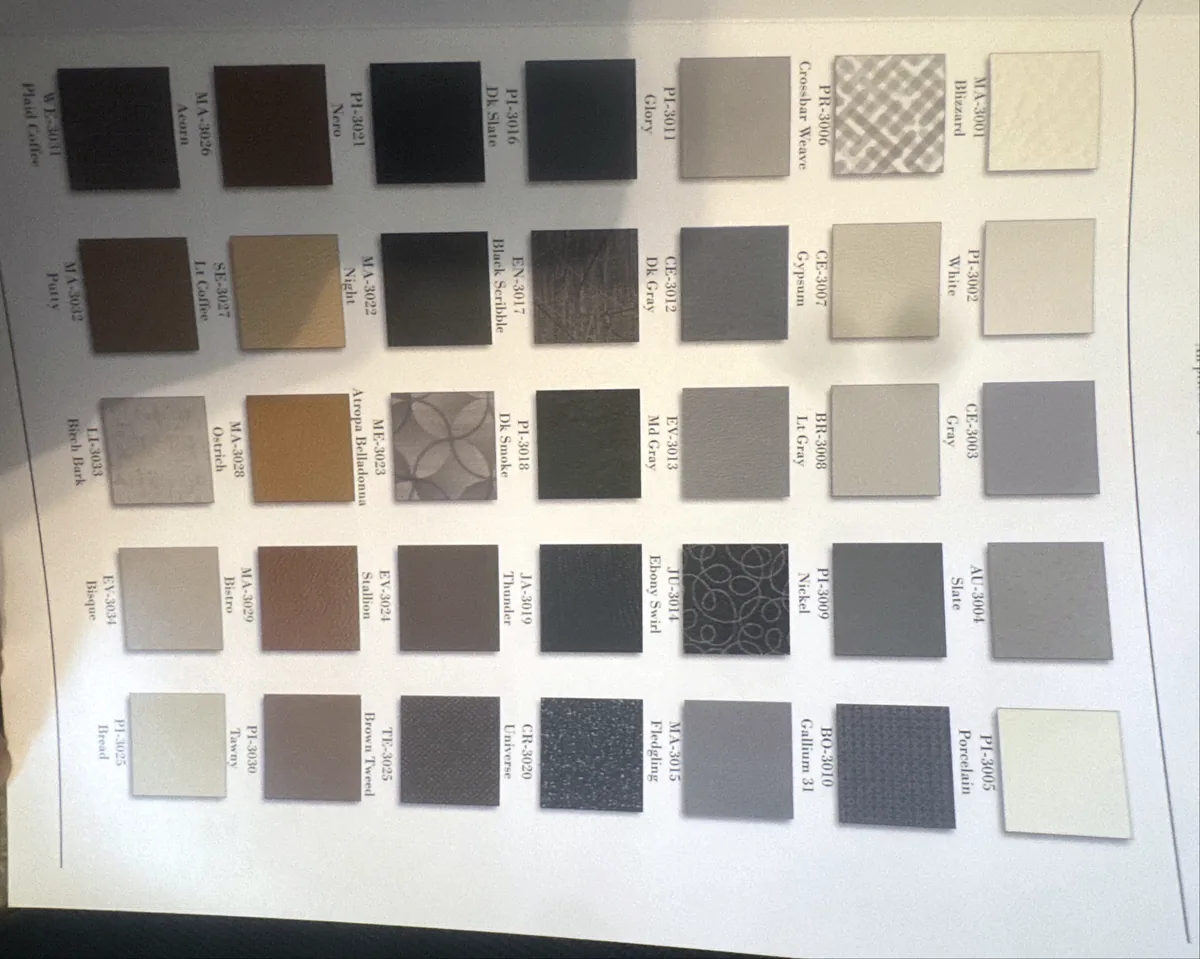
Every commercial fabric carries a cleaning code for a reason. Match the method to the code and a performance weave shrugs off a decade of hospitality duty.

  • Vacuum weekly with an upholstery attachment to pull grit out of the weave.
  • Blot spills from the outside in, never rub, which drives stains deeper.
  • Spot-clean to the code: W (water-based), S (solvent only), W/S (either), X (vacuum only).
  • Have high-traffic booths professionally cleaned once or twice a year.
Keep in mind

Over-wetting is the number-one cause of rings and mildew. Less water, blotted dry, beats a soaked cushion every time.

Sims performance fabric swatch book with cleaning codes
SURFACE · PERFORMANCE FABRIC
03 Leather & Leather-Look

Leather: a little routine, a long life.

Genuine leather rewards a light touch and a steady habit. Leather-look vinyls want the vinyl routine above, when in doubt, treat it as vinyl.

  • Dust and wipe with a dry or barely-damp cloth each week.
  • Condition genuine leather two to four times a year to keep it supple.
  • Blot spills immediately; let the spot air-dry, away from heat.
  • Keep booths out of long direct sun to prevent fade and drying.
Keep in mind

Skip saddle soap, solvents, and “all-purpose” sprays on genuine leather, use a pH-balanced leather cleaner and conditioner made for upholstery.

Leather-look commercial booth
SURFACE · LEATHER
04 Velvet & Pile

Velvet: manage the nap.

Velvet reads luxe and holds up better than people expect in a commercial room. The whole game is managing the pile.

  • Brush the pile in one direction with a soft upholstery brush.
  • Vacuum on low suction with a flat attachment, no beater bar.
  • Blot spills and let them air-dry; lift crushed pile with light steam.
  • Rotate loose cushions where possible so wear evens out.
Keep in mind

Never scrub velvet, scrubbing permanently crushes the nap. Blot only, always in the direction of the pile.

Velvet and pile fabric swatches
SURFACE · VELVET
05 Wood & Laminate Trim

Cap strips & bases: the high-touch edge.

The cap strip takes more arm-wear than any other surface on the booth. Finished wood and laminate both clean easily, with the right habit and the wrong products kept away.

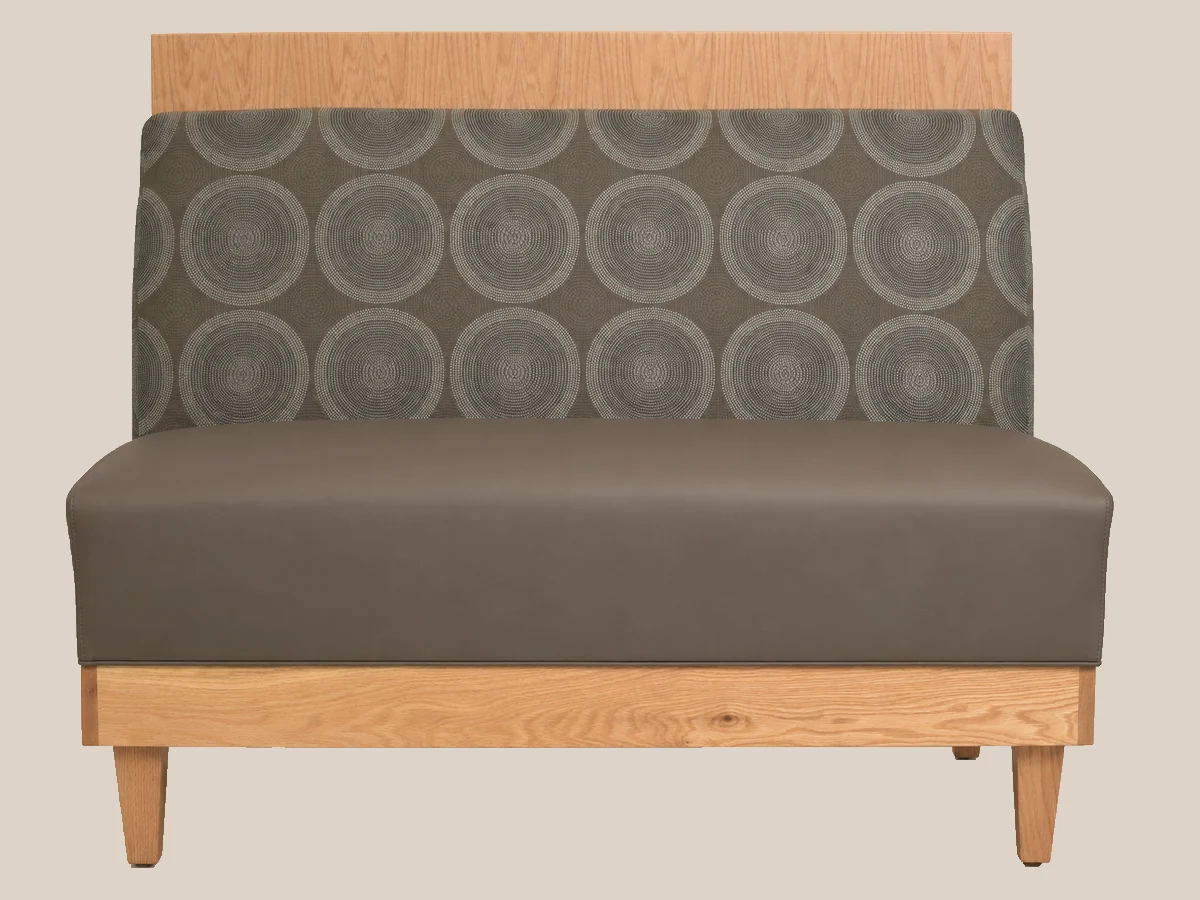
  • Wipe with a soft damp cloth and dry it off; no standing water on seams.
  • Use trays or coasters under hot or wet items at the cap strip.
  • Refresh finished wood occasionally with a quality furniture polish.
  • Address loose or lifting trim early, it’s a quick fix when caught.
Keep in mind

Keep abrasive pads, powders, and harsh degreasers off laminate, they dull the finish permanently.

Booth with wood-trim cap strip
SURFACE · WOOD & LAMINATE
06 Frames, Springs & Foam

The part you can’t see, and why it lasts.

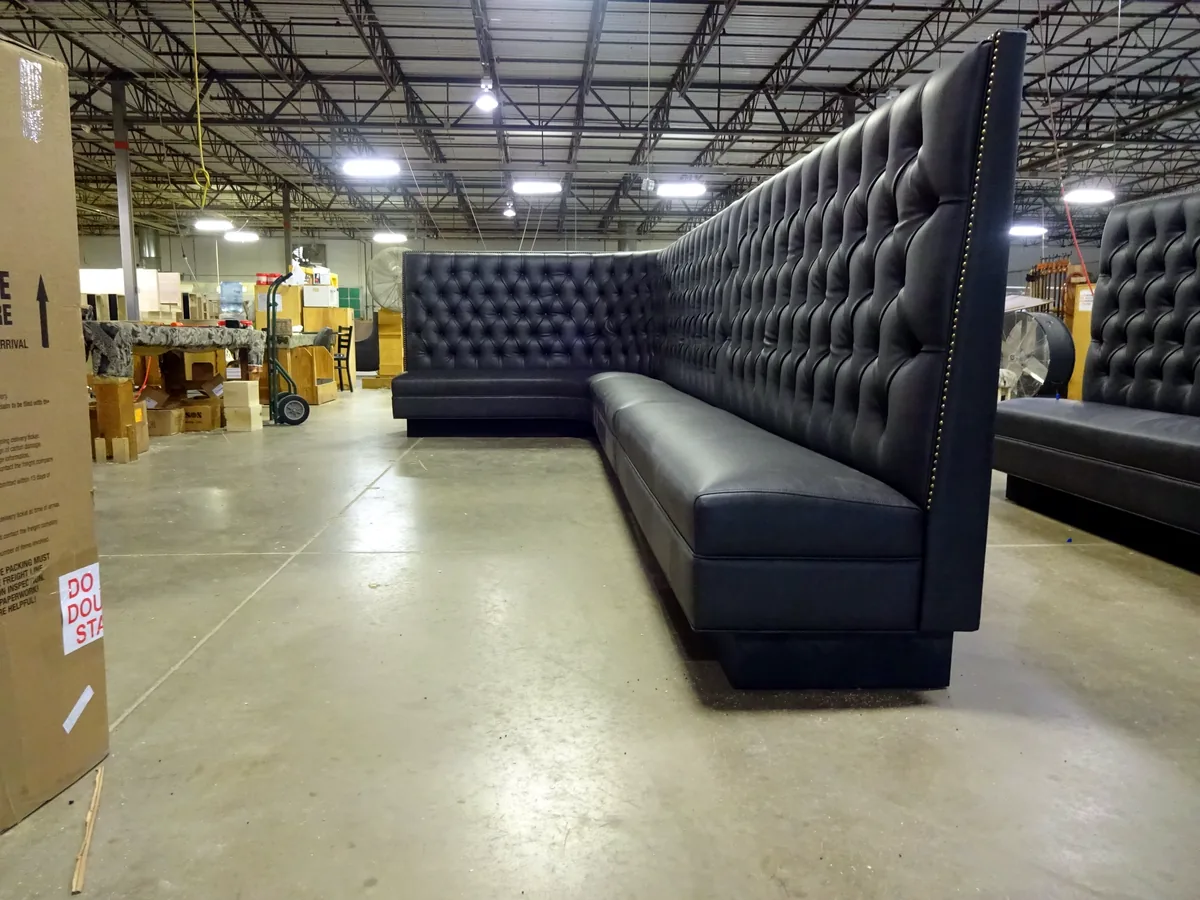
You never look at the kiln-dried frame, the sinuous-spring deck, or the high-density foam. But they’re the reason a Sims booth is still in service when the cheap one is in the dumpster.

  • Lift booths to move them, dragging racks the frame and joints.
  • Keep loads centered on the seat deck; avoid standing or kneeling on edges.
  • Report a soft or noisy deck early, it’s usually a small repair, not a replacement.
  • Re-tighten any visible base or leg hardware during deep cleans.
Keep in mind

A frame kept dry, level and tight outlasts several surfaces, which is the whole reason these are built on kiln-dried hardwood rather than particle board.

Sims booth frame and seat-deck construction on the shop floor
STRUCTURE · FRAME & DECK
The Short List

Keep these off your booths.

Most premature wear we see in the field isn’t use, it’s a cleaning cabinet. These are the products that quietly shorten a booth’s life.

Bleach & chlorine

Strips color and breaks down vinyl and fabric backing, fast.

Ammonia / glass cleaner

Dries and yellows vinyl; sets many fabric stains permanently.

Alcohol & sanitizer wipes

Dissolve the plasticizers in vinyl, leading to cracking and stiffening.

Acetone & solvents

Eat finishes and adhesives; never use on vinyl, laminate, or leather.

Abrasive pads & powders

Scratch vinyl, dull laminate, and crush fabric and velvet pile.

Over-wetting fabric

Causes water rings, weakens backing, and invites mildew under the foam.

The safe default for nearly every Sims surface: mild dish soap, warm water, a soft cloth, and a dry-off. When a stain needs more, match the cleaner to the material, or ask us first.

The Five-Minute Close-Out

Five minutes at close keeps them new.

None of this is hard, it’s a closing-shift habit. A booth that gets wiped and blotted nightly never gives the room a chance to look worn.

  1. 01 Wipe seats and cap strips with a damp soft cloth.
  2. 02 Blot any spills before they set, outside-in, no rubbing.
  3. 03 Vacuum crumbs and grit out of seams and channels.
  4. 04 Scan for loose trim, lifting laminate, or a soft deck.
  5. 05 Spot-treat marks now; they get harder the longer they wait.
Care Questions?

Not sure what’s safe on your fabric?

Tell us your material or color code, or send a photo of a problem spot, and we’ll send back the exact care method for it.